A spaced repetition dashboard for one skill
A full spaced-repetition dashboard for one skill at a time. Set up what you are learning, break it into lessons with start dates, and log short study sessions as you go. The system uses the SuperMemo 2 (SM2) algorithm to schedule review days, tracks your retention curve, and flags plateaus with specific interventions built from the research on expert performance.
 Goals & Progress
Learning Acceleration System
Cut your learning curve in half with spaced, active repetition
Neuroplasticity-based learning with spaced repetition and plateau detection: a system that adapts to how your brain actually retains information.
Configure your system
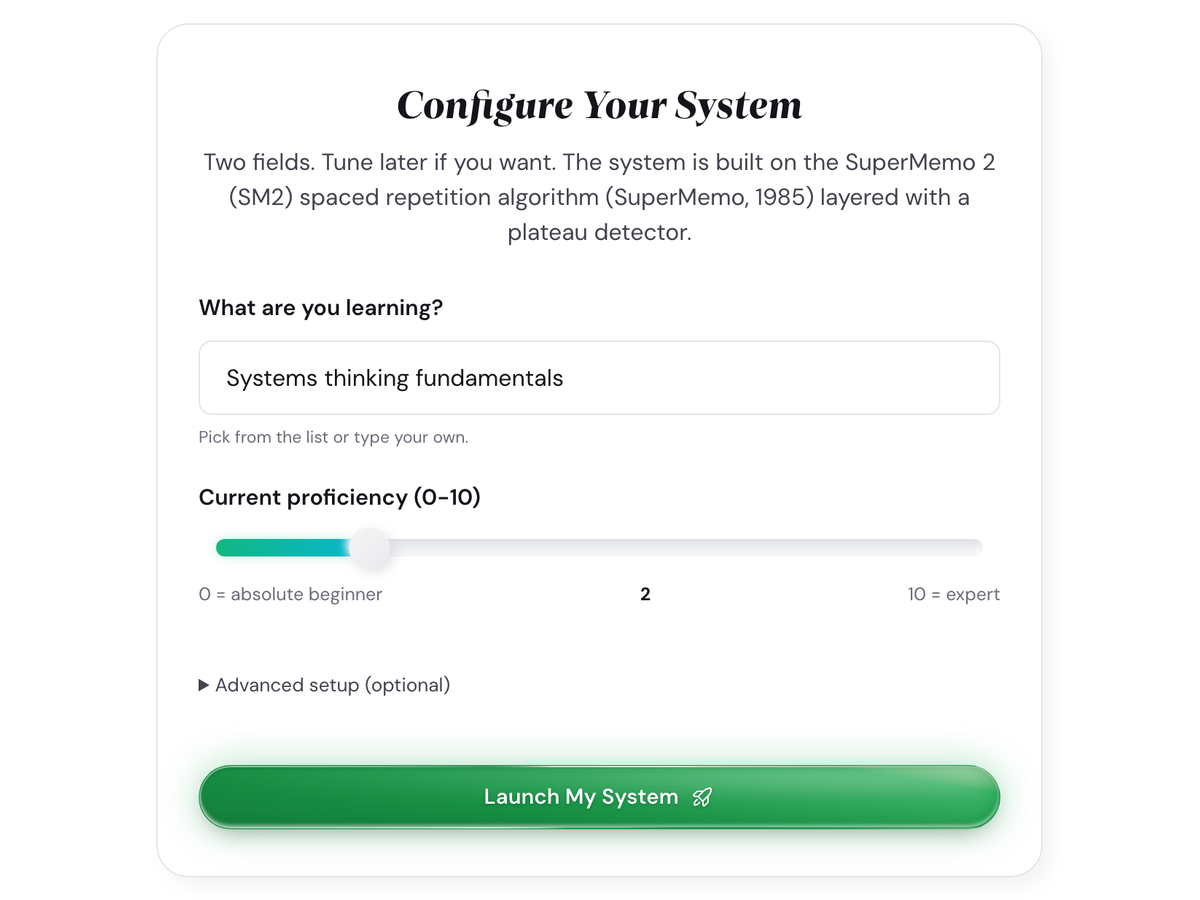
Two fields. Tune later if you want. The system is built on the SuperMemo 2 (SM2) spaced repetition algorithm (SuperMemo, 1985) layered with a plateau detector.
Advanced setup (optional)
My learning
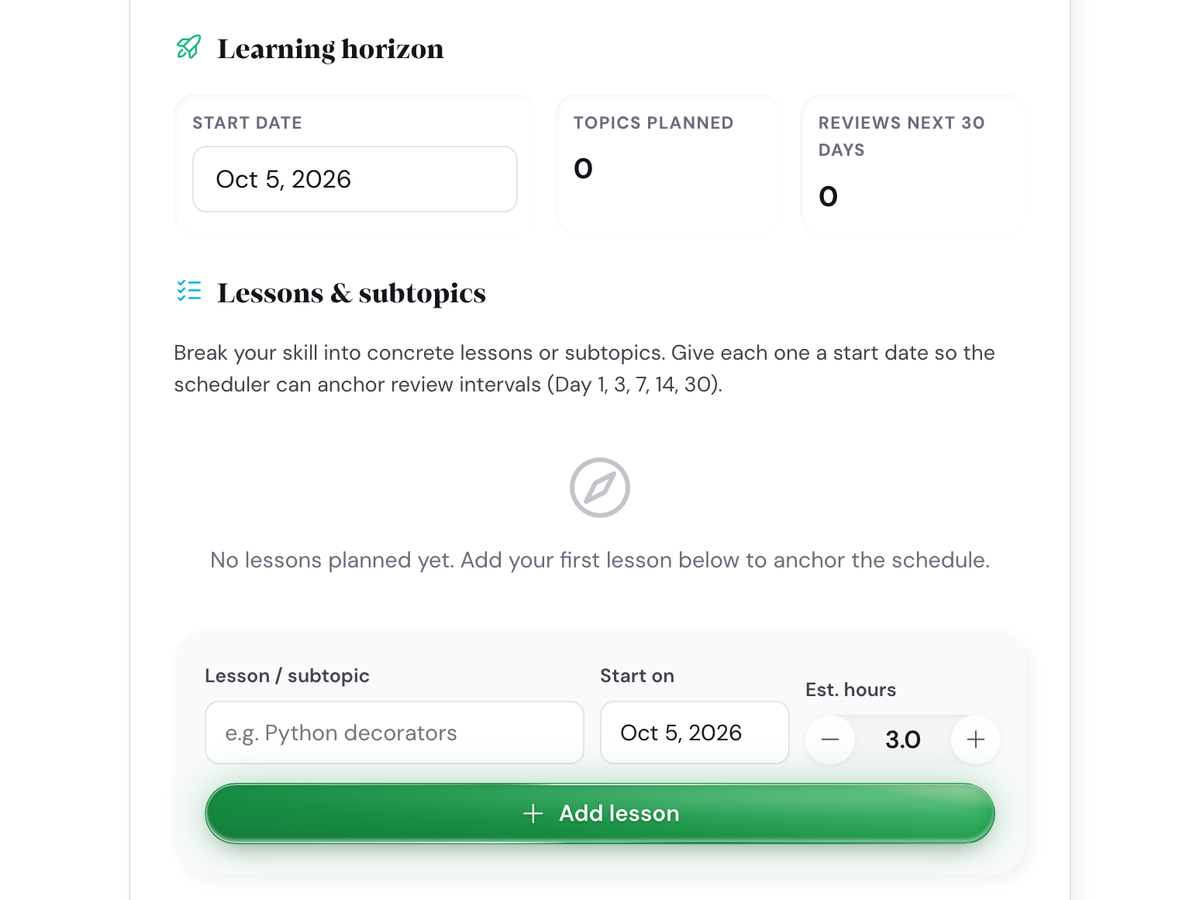
Break your skill into concrete lessons or subtopics. Give each one a start date so the scheduler can anchor review intervals (Day 1, 3, 7, 14, 30).
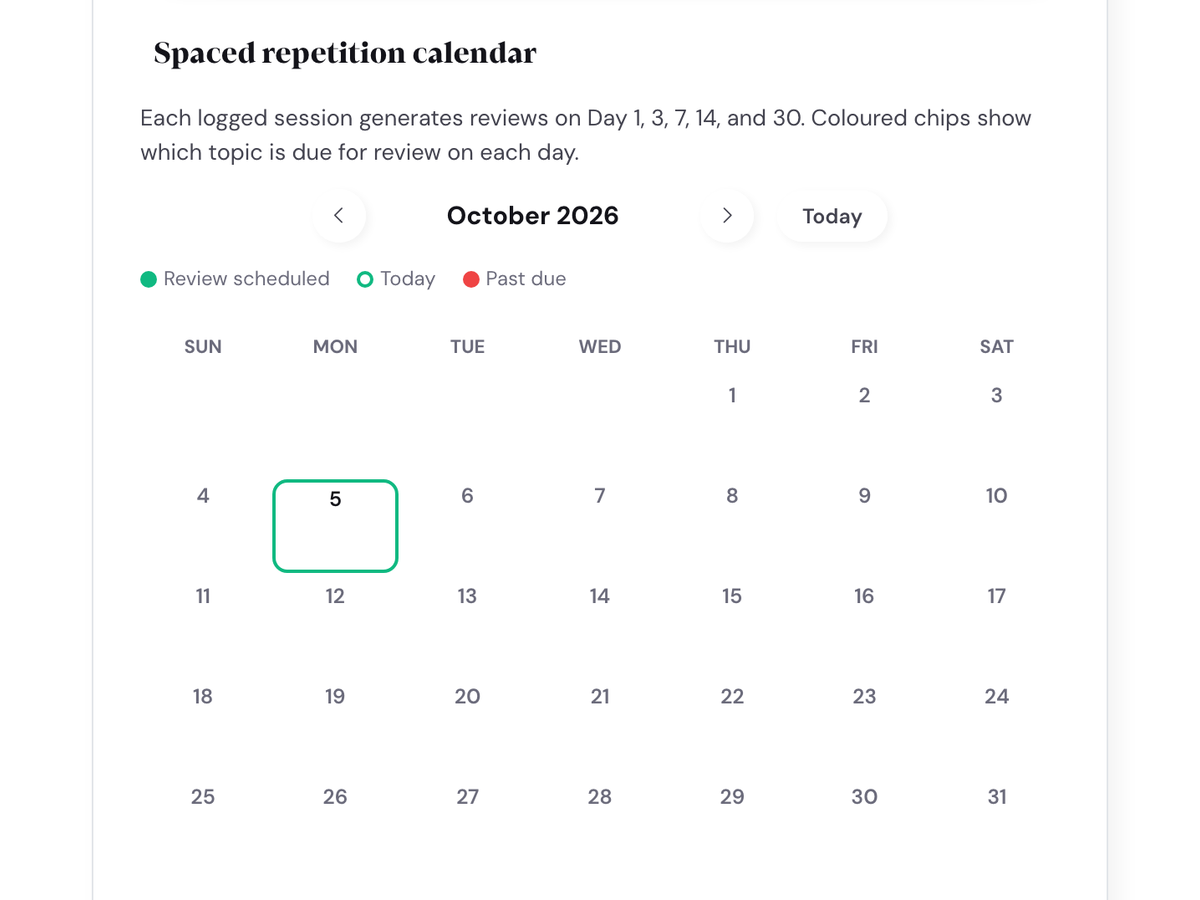
Each logged session generates reviews on Day 1, 3, 7, 14, and 30. Coloured chips show which topic is due for review on each day.
Pick the lesson you studied, log how long, and rate how well it stuck. Each session feeds the spaced-repetition schedule.
What this tool solves
Flashcard apps handle vocabulary well. They are not designed to track how you are progressing on a whole skill, or to notice when you have stopped progressing. A language learner plateauing on intermediate Spanish needs more than another deck of cards. A programmer stuck on the middle third of a systems-thinking book needs to know it, not keep re-reading. This dashboard covers the layer above the flashcard. You work at the topic level (present tense grammar, recursion, a specific piece of music) and log a 30-second session per study block with a recall rating. The SM2 algorithm schedules when each topic is due for review so you see it just as you are about to forget. The retention chart shows whether you are actually improving week to week. And the plateau detector watches for stalls in your retention trend and, when it spots one, suggests specific interventions from the expertise-acquisition research so you have something to try before the frustration wins.
Screenshot walkthrough
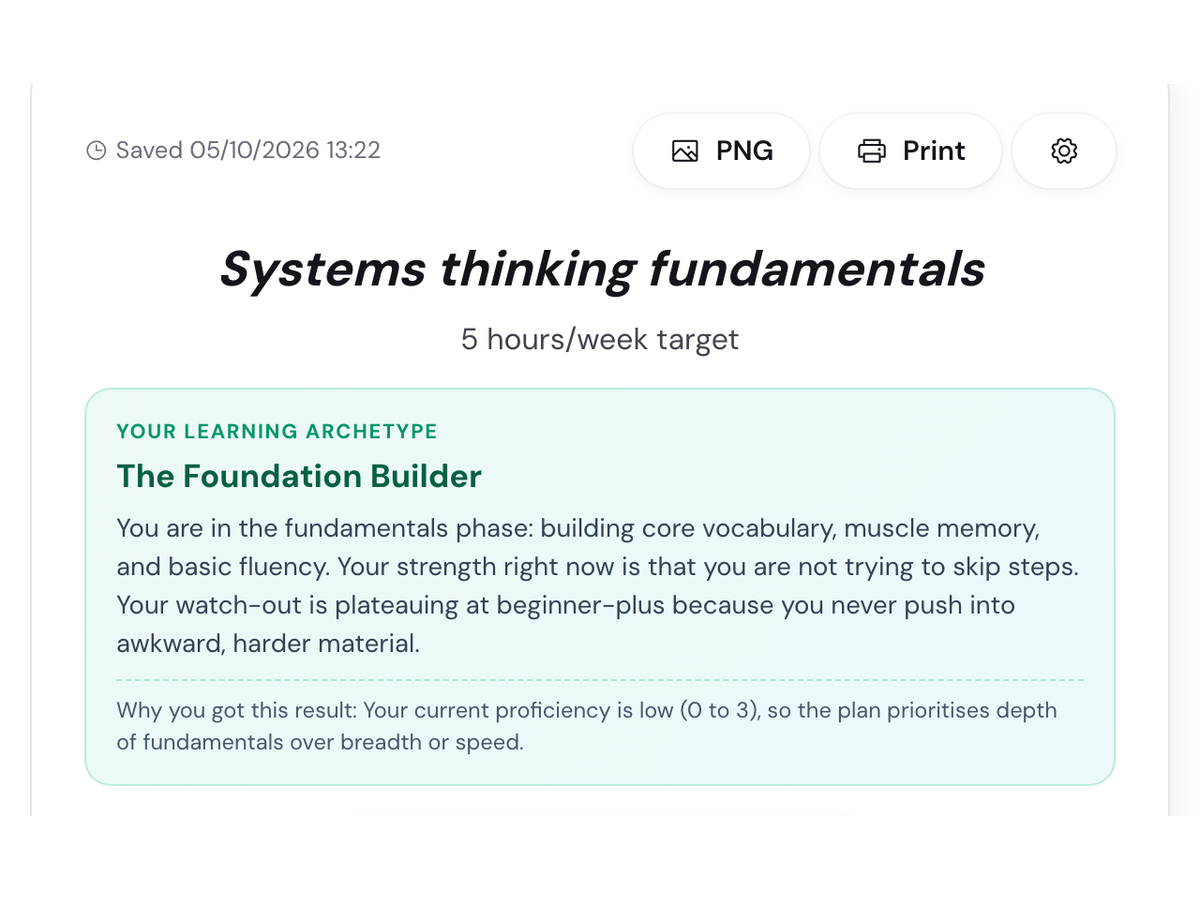
Here is what the setup and initial dashboard look like, using someone learning systems thinking fundamentals as the running example. The archetype in play is Foundation Builder, which is what the tool assigns when your current proficiency is low (0 to 3) and the priority is depth of fundamentals before breadth or speed.
How SM2 scheduling and plateau detection work together
Two engines drive the dashboard. The first decides when each topic is due for review. The second watches whether the reviews are actually working, and raises a flag when they are not. Both are grounded in well-replicated learning-science research, which is what makes the tool a full system rather than just a calendar.
The setup and lesson breakdown
Setup is two fields: what you are learning and your current proficiency on a 0 to 10 scale. Those two inputs pick your learning archetype (Foundation Builder, Ramp Builder, Plateau Breaker, Consolidator) and tune the rest of the dashboard to that phase. From there you break the skill into concrete lessons or subtopics with start dates. Five to 15 lessons is the sweet spot; fewer and you cannot see patterns, more and the review calendar gets noisy. The start date is important because it anchors the SM2 review schedule for that lesson.
Session logging and the SM2 cadence
Each study session takes 30 seconds to log: pick the lesson, rate recall on a 0 to 5 scale, note any subjective difficulty, done. The SM2 algorithm then schedules the next review on the 1, 3, 7, 14, 30 day cadence. Strong recall pushes the next review further out; weak recall pulls it in closer. The review calendar paints chips on the due dates so you can see the next 30 days of reviews at a glance. The retention chart tracks your rolling recall average so you can see whether the hours you are putting in are translating into actual skill.
The plateau detector
The detector watches your retention trend across the last two to three weeks. If your average recall score stops improving or starts sliding, the dashboard flags a plateau on that topic and suggests one of four interventions drawn from the deliberate-practice research: reduce session length, introduce testing before study (retrieval before reading), switch the input mode (listening to reading, watching to doing), or interleave a different topic. This is the point where most learners give up without knowing what else to try. The detector gives you something concrete.
Archetype-tuned guidance
The archetype banner at the top of the dashboard is not cosmetic. It changes what the plateau detector treats as normal and what it flags, which advice it surfaces, and how aggressively it suggests you push the material. A Foundation Builder at proficiency 2 gets different pressure than a Plateau Breaker at proficiency 6 who has been at it for three months. The session-logging interface stays the same; the underlying coaching layer adjusts.
The research behind spaced repetition and plateaus
The scheduling engine uses the SuperMemo 2 (SM2) algorithm published by Piotr Wozniak in 1985, which is the same spaced repetition logic behind Anki and most modern flashcard systems. The 1, 3, 7, 14, 30 day cadence traces back to Hermann Ebbinghaus's forgetting curve research in the 1880s and was refined by cognitive psychologists including Cepeda et al. (2008), whose meta-analysis on spacing effects showed retention gains of 2x or more versus massed practice. These are some of the most replicated findings in learning science.
The plateau detector draws on Anders Ericsson's expertise research (Ericsson, 1993, and later work), which makes one point consistently: when progress stalls, the fix is almost always a change in the structure of deliberate practice, not just more hours. The four interventions the detector suggests (shorter sessions, testing before study, mode switches, interleaving) are the same classes of change Ericsson repeatedly identified as what separates learners who break through plateaus from learners who quit on them. For the full evidence base and how spaced repetition sits against other learning techniques, see the guides below.
Who gets the most out of this tool
- Language learners past the Duolingo phase who need real grammar and vocabulary retention
- Self-taught programmers working through a book or course and tired of re-reading the same chapter three times
- Musicians practising a piece and wanting to see whether recall is actually improving week over week
- Certification studiers who need the material to stick through an exam months away
- Graduate students and professional researchers memorising dense domain material
- Anyone who has bought too many courses and wants a dashboard that forces them to finish one
- Learners frustrated by flat-line progress who need a plateau detector, not another flashcard app
Related articles and guides
- Learning Methods Compared, where spaced repetition ranks against the other evidence-based techniques and when each one matters most.
- Neuroplasticity and Learning Science, the underlying brain research behind why spaced intervals and deliberate structure produce durable memory.
- Learning New Skills Quickly, how to structure the hours around a spaced-repetition dashboard to get to real competence faster.
Related growth tools
- Learning Style Optimizer Quiz
- Skills Gap Analyzer
- Habit Streak Tracker
Frequently asked questions
Scroll up to the tool above and start now. Your review calendar, retention chart, and plateau detector come online the moment you log your first session.