Your brain is not lazy – it’s scared
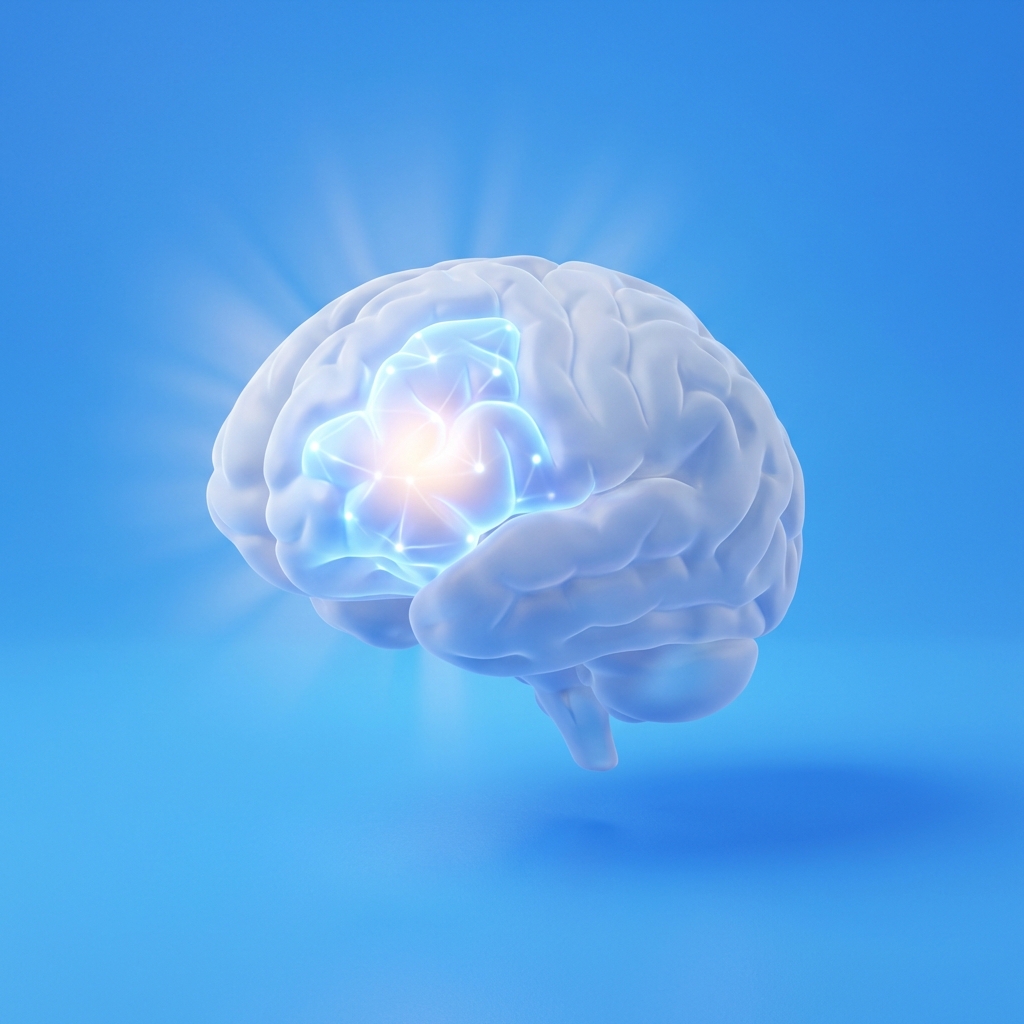
You’ve been staring at the task for twenty minutes. You know it matters. The deadline is real. And yet your fingers reach for your phone instead of the keyboard. Procrastination neuroscience reveals that this pattern isn’t a character flaw but a conflict between two brain systems competing for control [1]. The amygdala, your threat detector, flags the task as emotionally uncomfortable. The prefrontal cortex (PFC), responsible for long-term planning, tries to override that signal. Most of the time, the amygdala wins. Not because you lack discipline, but because evolution built the emotional system to react faster than the rational one.Procrastination neuroscience studies how brain structures and neurochemical processes produce task avoidance despite knowing the consequences are negative. It identifies specific neural mechanisms – amygdala reactivity, prefrontal cortex regulation capacity, and dopamine reward processing – that drive delay.
What you will learn
- Why your amygdala and prefrontal cortex create what we call the “neural tug-of-war” behind procrastination
- How procrastination is fundamentally an emotion regulation problem
- Why your brain devalues future consequences through temporal discounting
- What role dopamine plays in making distraction feel more rewarding than work
- How ADHD intensifies the same neural patterns that drive all procrastination
Key takeaways
- Procrastination is an emotion regulation failure, not laziness or poor planning.
- The amygdala flags tasks as threats, firing before your rational brain gets involved [2].
- Larger amygdala volume and weaker amygdala-dACC connections correlate with higher procrastination [3].
- Temporal discounting makes distant deadlines feel psychologically weightless [5].
- Dopamine drives you toward quick rewards when difficult tasks trigger negative emotions [6][7].
- ADHD amplifies this neural conflict through reduced PFC activity and lower baseline dopamine [9].
- Effective strategies bypass the amygdala-PFC conflict instead of trying to win it.
The neural tug-of-war behind procrastination
Every time you face a task you’ve been avoiding, two brain regions enter conflict. The amygdala, a small almond-shaped structure, scans for emotional threats. The prefrontal cortex, behind your forehead, handles planning, impulse control, and rational decision-making. Psychologist Tim Pychyl at Carleton University calls procrastination “the primacy of short-term mood repair” [2]. Your brain isn’t choosing laziness. It’s choosing emotional safety.
Neural tug-of-war describes the conflict between the amygdala’s rapid threat-detection response and the prefrontal cortex’s slower goal-planning capacity, where the amygdala typically wins because evolution built the emotional system to fire faster than the rational one.
A 2018 study by Schluter and colleagues used brain imaging to measure this conflict directly. They found that people who procrastinate more have a larger amygdala volume and weaker functional connectivity between the amygdala and the dorsal anterior cingulate cortex (dACC) [3]. People who procrastinate more have a measurably stronger threat-detection system and weaker neural brakes to override it. The dACC sits within the broader frontal cortex and acts as a mediator between emotion and action. When its connection to the amygdala is weak, the override signal arrives too late or too faint.
“Procrastination is not a time management problem. It is an emotion regulation problem.”
– Fuschia Sirois and Timothy Pychyl, researchers on procrastination and self-regulation [2]
Here’s how it plays out in real time. You open your laptop to write a difficult email. Within a fraction of a second, the amygdala registers emotional discomfort [11]. Shortly after, you’re already feeling the urge to check social media. The PFC, needing several seconds to activate, arrives late. By the time rational thought kicks in, you’re three posts deep into a feed. Think of this as the neural tug-of-war in action – one side pulling toward emotional escape, the other toward your actual goals. And the contest was over before you knew it started.
Procrastination is an emotion regulation problem, not a time problem
The biggest misconception about procrastination is that it’s about time. It’s not. Researchers Fuschia Sirois and Timothy Pychyl, in landmark research published in Social and Personality Psychology Compass, found that procrastination is fundamentally about managing negative emotions [2]. When a task triggers anxiety or boredom, the brain defaults to short-term mood repair. You don’t scroll your phone because you’re bad at planning. You scroll because your brain needs to escape the discomfort right now.
Procrastination functions as an emotional coping mechanism where the amygdala prioritizes immediate mood repair through avoidance, overriding long-term goal planning. This is why time management advice fails. No planner can fix a nervous system treating a work task like a physical threat. And here’s the irony: avoidance creates guilt, which the amygdala registers as new threat, which triggers more avoidance. It’s a feedback loop with no natural off-switch. For those whose perfectionism fuels the avoidance cycle, the emotional stakes feel even higher because the task becomes tied to self-worth.
Zhang and colleagues confirmed this loop in a 2019 study examining the cognitive mechanisms underlying procrastination. The interaction between amygdala and dACC predicted procrastination behavior [4]. The dACC normally helps regulate emotional responses and select appropriate actions. In chronic procrastinators, this regulatory pathway underperforms. Their brains weren’t broken. The emotion management circuit was just running a weaker signal.
Temporal discounting makes future deadlines feel optional
Your brain has a built-in bias toward the present. Temporal discounting is the tendency to value immediate rewards far more than future ones, even when the future reward is objectively larger [5]. A deadline three weeks away feels abstract. The dopamine hit from a YouTube video feels real right now. From an evolutionary perspective, this made sense. For most of human history, the future was unpredictable, so prioritizing immediate gains was survival.
Temporal discounting is the cognitive bias of valuing immediate rewards disproportionately more than future rewards of equal or greater objective value, producing a steeper preference curve for present payoffs over delayed consequences.
Piers Steel’s meta-analysis of procrastination research identified impulsiveness as one of the strongest predictors of procrastination [5]. Impulsiveness, at the neural level, reflects steep temporal discounting. The steeper your discount curve, the more you favor “now” over “later.” A task due next week feels optional. This is also why deadlines work: as a deadline approaches, temporal discounting shrinks. The amygdala finally registers threat as immediate, producing the motivation that was absent all along. But deadline-driven productivity is exhausting. You’re relying on panic, not planning.
What dopamine really does in the procrastination brain
Dopamine doesn’t cause pleasure. That’s the myth. Neuroscientist Wolfram Schultz’s landmark research revealed that dopamine signals anticipated reward – it’s the brain’s prediction that something will feel good and is worth pursuing [6]. When you’re facing a task that feels boring or threatening, dopamine activity drops for that task. But it spikes for easier, more immediately rewarding alternatives. Your brain isn’t refusing to work. It’s following the dopamine gradient.
“Mesolimbic dopamine is not about pleasure. It is about the wanting – the motivation to pursue rewards – which can diverge entirely from the liking.”
– Kent Berridge and Terry Robinson, neuroscientists studying reward systems [7]
Dopamine creates a neurochemical bias toward activities with predictable, immediate rewards, which is why your phone outcompetes meaningful work during moments of task aversion. Research by Berridge and Robinson on the brain’s reward system shows that the mesolimbic dopamine pathway – running from the ventral tegmental area to the nucleus accumbens – computes the incentive value of every available action [7]. A difficult report scores low in anticipated reward. A notification scores high.
In simple terms, your brain is doing math on which option feels most rewarding – and the phone wins. You don’t consciously choose the phone. The dopamine system has already tilted the scale. Research on motivation neurobiology by Salamone and Correa shows that dopamine release is task-dependent [8]. When facing something that feels aversive, your dopamine system downregulates for that specific task. The moment your attention shifts to something easier, dopamine spikes. Dopamine is the amygdala’s strongest ally in the neural tug-of-war. When a task triggers negative emotions, dopamine activity shifts toward escape behaviors. The PFC’s override capacity is finite and degrades under fatigue, stress, and cognitive load, which is why willpower “runs out” on hard days.
How ADHD intensifies the neural conflict
If the neural tug-of-war is a fair fight for most people, ADHD tilts the arena. Research by neuroscientist Amy Arnsten on the catecholamine biology of ADHD shows that affected individuals have lower baseline dopamine and norepinephrine signaling in prefrontal cortical circuits [9]. This produces weaker PFC activation – the very region responsible for overriding the amygdala’s threat signal. ADHD does not produce a more reactive amygdala. It produces a weaker prefrontal cortex brake pedal. The same neural architecture runs with different settings, and those settings make procrastination more frequent, more intense, and harder to break.
ADHD-related procrastination stems from the same amygdala-PFC conflict as neurotypical procrastination, but with a weaker PFC signal and steeper temporal discounting. This is why “just start” advice feels insulting to people with ADHD. Their prefrontal cortex isn’t producing enough regulatory force to overpower the amygdala’s threat signal. Telling them to “just start” is like asking someone to lift a heavier weight with a smaller muscle. The instruction is technically correct. It’s neurologically unhelpful.
But the same neuroscience points toward better solutions. Strategies that reduce emotional load – like breaking tasks into micro-commitments – or that create external structure work by routing around the PFC bottleneck. You don’t need more willpower. You need systems that demand less of it. For ADHD-specific approaches, procrastination strategies built for ADHD brains go deeper into what actually works.
Three neuroscience-backed ways to shift the battle
The honest answer is you can’t eliminate the neural tug-of-war. That conflict between emotion and rationality is baked into human brain architecture. But you can change the terms of the fight. Three categories of intervention shift the balance away from avoidance and toward action.
Reduce the amygdala’s threat signal. The simplest intervention is making the task feel less threatening. The two-minute rule and micro-commitments technique works here because “open the document and type one sentence” triggers a weaker amygdala response than “write the entire report.” Reducing the perceived threat level of the task corresponds to lower amygdala engagement, lowering the barrier to starting.
Strengthen the prefrontal cortex signal. The PFC runs on finite resources, but those resources can be protected. Sleep deprivation reduces PFC function and impairs cognitive performance across multiple domains [12]. Chronic stress and decision fatigue compound the effect. Protecting your PFC means protecting sleep, reducing unnecessary decisions earlier in the day, and scheduling your most procrastination-prone tasks during peak cognitive hours. The brain that procrastinates at 4 PM is the same brain that, under different conditions, produces sustained focus at 10 AM.
Bypass the conflict entirely. The most effective strategies don’t try to win the tug-of-war. They skip it. Precommitment devices remove the decision point by committing you to action before the amygdala objects. Structured procrastination and other systematic approaches combine multiple interventions to create an environment where starting is the default. The most reliable interventions restructure the environment so that starting requires less neural effort than avoiding.
Ramon’s take
The people who procrastinate most are often the ones who care most. In my work managing global product launches, I’ve watched high-performers freeze on projects that could define their promotion while breezing through routine tasks they could do asleep. That pattern makes zero sense if procrastination is about laziness – but it makes perfect sense if it’s about emotional threat.
What procrastination neuroscience means for your approach
Procrastination neuroscience tells a story that most productivity advice ignores. Your brain isn’t broken, lazy, or undisciplined. It’s running a conflict between an ancient emotional system designed for survival and a newer rational system designed for long-term planning. The amygdala fires first, the PFC fires second, and dopamine tilts the balance toward whatever feels easiest right now.
Knowing this doesn’t make procrastination disappear. But it changes what you do about it. Instead of fighting your brain, you build systems that work with how it’s wired. The difference between procrastinating and performing isn’t character. It’s architecture.
Next 10 minutes
- Identify one task you’re avoiding and write down the specific emotion it triggers.
- Break that task into a version so small it feels almost trivially easy.
- Set a timer for five minutes and start the micro-version with no commitment to continue.
This week
- Track which tasks trigger the most avoidance and note the emotional pattern behind each.
- Schedule your most procrastination-prone task during your peak cognitive hours.
- Set up one precommitment device for your biggest avoidance trigger.
There is more to explore
For a full toolkit of evidence-based strategies, explore our complete guide to overcoming procrastination. If you want to understand how these neural mechanisms apply to your specific procrastination pattern, see the practical strategies matched to procrastination types. And for ADHD-specific approaches, check our guide on procrastination strategies built for ADHD brains.
Related articles in this guide
Frequently asked questions
What part of the brain causes procrastination?
The amygdala is the primary driver of procrastination, flagging tasks as emotionally threatening and triggering avoidance behavior before the prefrontal cortex can intervene. The dorsal anterior cingulate cortex (dACC) also plays a role as the mediator between emotional and rational responses, and weaker dACC connectivity correlates with higher procrastination [3][4]. No single brain region causes procrastination in isolation – it results from the interaction between multiple systems.
Is procrastination a neurological problem or a psychological one?
Procrastination involves both. Neuroimaging studies show measurable brain differences in procrastinators, including larger amygdala volume and weaker amygdala-dACC connectivity [3]. At the same time, psychological factors like fear of failure, perfectionism, and task aversion shape which tasks trigger avoidance. Treating procrastination as purely neurological ignores the emotional context, while treating it as purely psychological ignores the structural brain differences that make some people more vulnerable.
Can you train your brain to stop procrastinating?
You cannot eliminate the amygdala-PFC conflict because it is a feature of human neural architecture, not a bug. You can reduce procrastination frequency and intensity through consistent practices that strengthen PFC function (adequate sleep, stress management, regular exercise) and through environmental design that lowers emotional barriers to starting. Neuroplasticity allows the brain to build stronger regulatory pathways over time, but this requires sustained practice rather than a one-time fix.
Is procrastination linked to anxiety?
Procrastination and anxiety share overlapping neural mechanisms, particularly heightened amygdala reactivity to perceived threats. Research shows that people with higher anxiety levels procrastinate more because their threat-detection system is more sensitive, tagging more tasks as emotionally dangerous [1][2]. This does not mean procrastination is an anxiety disorder itself, but chronic procrastination can co-occur with generalized anxiety. Addressing the underlying anxiety through therapy or medication often reduces procrastination as a secondary benefit.
Why do procrastinators perform well under deadline pressure?
Deadline pressure works because it collapses temporal discounting. Research in behavioral neuroscience shows that the discount rate for consequences approaches zero as temporal proximity approaches zero [10]. When a deadline transitions from abstract to imminent, the brain stops treating the consequence as distant and registers it as immediate threat. This activates the amygdala in a productive direction – the fear of missing the deadline now outweighs the fear of doing the task. The prefrontal cortex also receives an urgency signal that temporarily boosts its override capacity. This is why procrastinators can produce quality work at the last minute, but the strategy is unsustainable because it relies on stress hormones that cause long-term health consequences.
What neurotransmitter is involved in procrastination?
Dopamine is the primary neurotransmitter involved in procrastination. Schultz’s research showed that dopamine signals anticipated reward rather than pleasure itself [6], creating a neurochemical bias that draws the brain toward activities with predictable, immediate payoffs. When a task feels boring or threatening, dopamine activity drops for that task but spikes for easier alternatives like social media [8]. The mesolimbic dopamine pathway, running from the ventral tegmental area to the nucleus accumbens, computes the incentive value of every available action [7] and tilts behavior toward the path of least emotional resistance.
References
[1] Rozental, A., & Carlbring, P. (2014). “Understanding and Treating Procrastination: A Review of a Common Self-Regulatory Failure.” Psychology, 5(13), 1488-1502. DOI
[2] Sirois, F. M., & Pychyl, T. A. (2013). “Procrastination and the Priority of Short-Term Mood Regulation: Consequences for Future Self.” Social and Personality Psychology Compass, 7(2), 115-127. DOI
[3] Schluter, C., Fraenz, C., Pinnow, M., Gunturkun, O., & Genc, E. (2018). “The Structural and Functional Signature of Action Control.” Psychological Science, 29(10), 1586-1593. DOI
[4] Zhang, W., et al. (2019). “To Do It Now or Later: The Cognitive Mechanisms and Neural Substrates Underlying Procrastination.” WIREs Cognitive Science, 10(4), e1492. DOI
[5] Steel, P. (2007). “The Nature of Procrastination: A Meta-Analytic and Theoretical Review of Quintessential Self-Regulatory Failure.” Psychological Bulletin, 133(1), 65-94. DOI | PubMed
[6] Schultz, W., Dayan, P., & Montague, P. R. (1997). “A Neural Substrate of Prediction and Reward.” Science, 275(5306), 1593-1599. DOI
[7] Berridge, K. C., & Robinson, T. E. (2003). “Parsing Reward.” Trends in Neurosciences, 26(9), 507-513. DOI
[8] Salamone, J. D., & Correa, M. (2012). “The Mysterious Motivational Functions of Mesolimbic Dopamine.” Neuron, 76(3), 470-485. DOI
[9] Arnsten, A. F. T., & Pliszka, S. R. (2011). “Catecholamine Influences on Prefrontal Cortical Function: Relevance to Treatment of Attention Deficit/Hyperactivity Disorder and Related Disorders.” Psychopharmacology, 216(1), 27-38. DOI
[10] Pattij, T., & Vanderschuren, L. J. (2008). “The Neuropharmacology of Impulsive Behaviour.” Trends in Pharmacological Sciences, 29(4), 192-199. DOI
[11] LeDoux, J. E. (1996). The Emotional Brain: The Mysterious Underpinnings of Emotional Life. Simon & Schuster.
[12] Lim, J., & Dinges, D. F. (2010). “A Meta-Analysis of the Impact of Short-Term Sleep Deprivation on Cognitive Variables.” Psychological Bulletin, 136(3), 375-389. DOI