The hidden cost of staying still
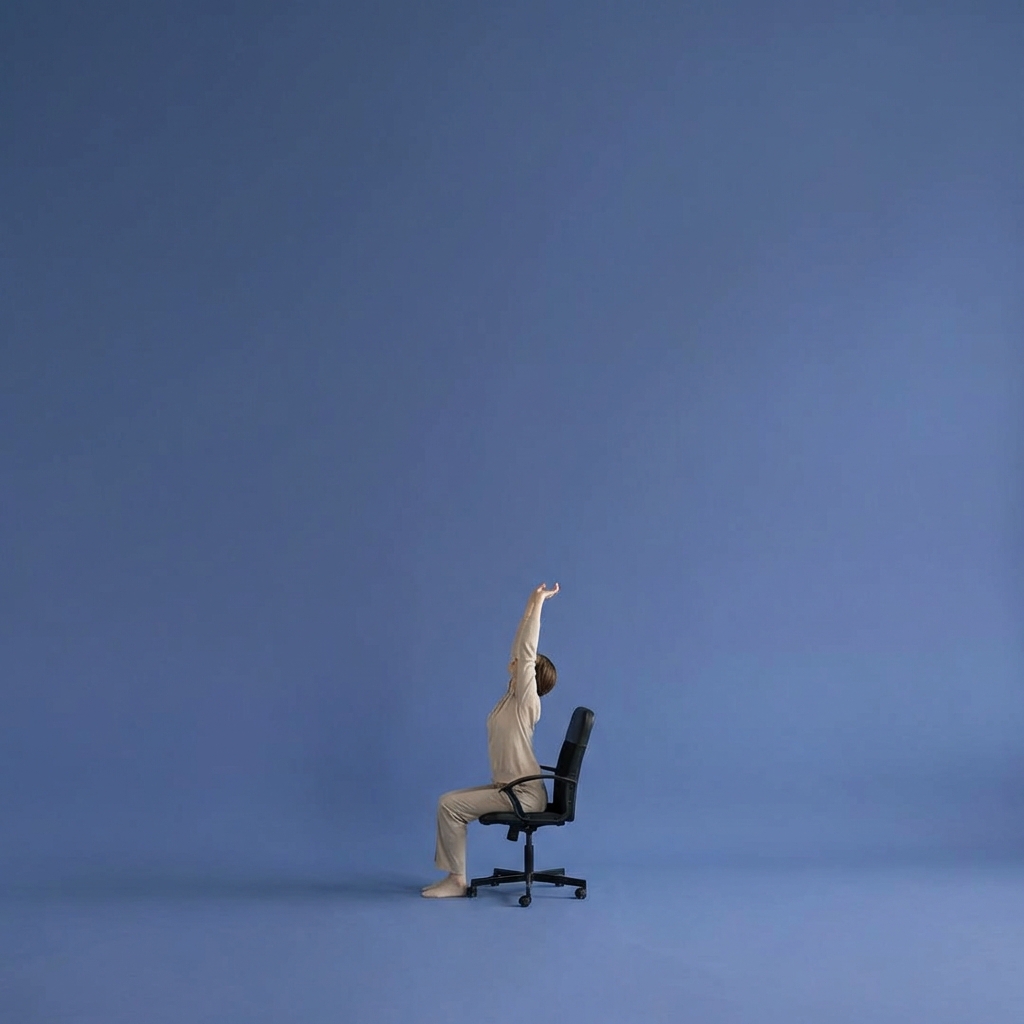
Working from home feels productive until it doesn’t. You sit through morning meetings, skip lunch at your desk, then realize at 5 PM that you haven’t left your chair in eight hours. Research from Stanford’s Center on Longevity found that remote workers spend 65% more time in sedentary behavior than office workers and 40% less time exercising [1]. The result isn’t just back pain-it’s cognitive decline, afternoon slumps, and a creeping sense that your work quality is deteriorating even as your hours increase.
The problem isn’t that you’re lazy. The problem is that offices had built-in movement triggers: walking to meetings, hallway conversations, trips to the water cooler, lunch with colleagues. Working from home eliminated those interruptions entirely, and willpower alone won’t replace them. The solution isn’t a gym membership or more discipline-it’s a system that makes movement the default rather than something you have to remember.
Movement breaks for remote workers are intentional intervals of physical activity scheduled throughout the workday, ranging from 2-minute micro-movements every 20 minutes to 5-10 minute active breaks every 90 minutes. Unlike passive rest breaks, movement breaks involve standing, walking, or light stretching, which counteract the physiological effects of prolonged sitting and restore cognitive performance without requiring a commute or gym setup.
What you will learn
- What we call the Remote Movement Framework: a tiered system for desk workers
- How frequently to move and why the 90-minute rhythm works
- Specific movement routines for back-to-back virtual meetings
- How to protect break time in a busy schedule
- Building the habit without relying on willpower
Key takeaways
- Remote workers accumulate 65% more sedentary time than office workers, but even short movement breaks reduce this disparity measurably [1].
- What we call the Remote Movement Framework stacks three types of breaks: 20-second micro-movements every 20 minutes, 3-5 minute active breaks every 60-90 minutes, and a proper 30-minute lunch break away from your desk.
- Active breaks measurably improve focus, reduce post-lunch fatigue, and lower stress levels-often more effectively than longer passive breaks [2].
- According to a FlexJobs survey, 60% of remote workers feel guilty taking breaks, so calendar blocking and environmental cues matter more than motivation [3].
- Two-minute walking sessions or standing desk protocols can replace expensive gym time and deliver comparable cognitive benefits.
The remote movement framework: Tiered movement protocol
Remote workers face a unique constraint: your office is your home, so the natural boundaries between work and movement don’t exist. What we call the Remote Movement Framework solves this with three tiers of movement, each serving a different purpose.
Tier 1: Micro-movements every 20 minutes. The 20-20-20 rule comes from optometrics but applies to your whole body: every 20 minutes, look away from your screen, stand, and move for 20 seconds. This isn’t a break-it’s a micro-reset. Stand, walk three laps around your desk, do shoulder rolls, step outside.
The goal is to interrupt the stillness pattern, not to exhaust yourself. A 20-second standing interval is the minimum viable movement-short enough that it doesn’t disrupt flow, long enough to reset blood flow and attention.
Henning et al.’s research on frequent short rest breaks from computer work confirmed this approach: brief, regular interruptions from seated work improved both productivity and well-being across two separate field sites [4]. If you need ideas for what to do during these micro-movements, desk exercises for office workers covers a range of options that work in small spaces.
Consider the practical example: Sarah, a product manager working from her spare bedroom, implemented the 20-second rule using a kitchen timer. She tracked her afternoon focus for two weeks: on days when she did the micro-movements, she stayed focused until 5 PM. On days she skipped them, her focus drifted by 3:30 PM. The difference wasn’t dramatic-just 20 seconds every 20 minutes-but the cumulative effect was measurable.
Tier 2: Active breaks every 60-90 minutes. After the pomodoro-adjacent 90-minute deep work block, take a 3-5 minute movement break. This is longer than a micro-movement and genuinely active: a walk around the block, a set of bodyweight exercises, or a standing stretch sequence. Research on remote workers found that 3-6 minute active breaks every hour reduced sedentary time accumulation and improved focus compared to passive sitting breaks [2].
Sleep researcher Nathaniel Kleitman’s work on the basic rest-activity cycle (BRAC) shows that your body runs through roughly 90-minute cycles of alertness and energy-the 90-minute rhythm matches this natural ultradian pattern [5].
This tier works so well for targeting the predictable energy dips in your workday. One marketing consultant we know blocks her calendar at 10:30 AM and 2:00 PM for “movement resets” and uses them for 4-minute walks around her neighborhood. She reports that these two breaks alone prevent her from hitting the wall mid-afternoon-the time when she used to reach for a third coffee and check social media to escape focus fatigue. The concept of exercise snacking for busy professionals applies directly here: short bursts of activity distributed across the day.
Tier 3: Protected lunch break (30-60 minutes). This is non-negotiable. Walk away from your desk entirely. Eat away from your workspace. The goal is a genuine mental break, not lunch at your desk monitoring Slack.
According to a FlexJobs survey, remote workers skip lunch entirely 30% of the time-often as the boundary between work and personal space has blurred [3]. Sonnentag et al.’s research on recovery experiences found that psychological detachment from work during breaks is a key predictor of next-day energy and affect [6]. Setting a hard stop for lunch isn’t slacking-it’s the only way to prevent your afternoon from collapsing into fatigue.
The three tiers work together. Tier 1 prevents long stretches of absolute stillness. Tier 2 resets your focus before it crashes. Tier 3 gives your brain genuine recovery.
All three together reduce the 65% sedentary disadvantage of remote work.
How frequently should you take movement breaks: The science
The research is specific about timing. A study published in the National Library of Medicine found that remote workers given structured movement interventions-three 3-5 minute active breaks per day, distributed across the workday-saw the proportion spending more than 10 hours daily in sedentary behavior drop from 31% to 14% [2]. They also reported reduced post-lunch sleepiness and lower stress levels.
Remote workers given structured active break interventions saw the proportion spending more than 10 hours daily in sedentary behavior drop from 31% to just 14%, with participants also reporting reduced post-lunch sleepiness and lower perceived stress. [2]
But this raises a practical question: what’s the actual minimum viable frequency? Can you do it less often and still see results?
Henning et al.’s field research showed that even two active microbreaks per hour (roughly every 30 minutes) improved cognitive performance by measurable margins compared to no breaks [4]. So if you can’t hit the three-breaks-per-day target, two per hour is the floor before you stop seeing benefits. The sweet spot appears to be breaks distributed across the 60-90 minute cycles-this aligns with when your focus naturally starts to drift.
One nuance: longer doesn’t always beat more frequent. A 20-minute lunch break taken once a day doesn’t produce the same cognitive benefits as distributed 3-5 minute breaks spread across the day. The distributed protocol works better: it prevents attention collapse before it happens rather than trying to recover from a full day of sitting.
The afternoon slump is real-your blood glucose, circulation, and neural activation have all declined by 2 PM. A single long break doesn’t reset these; distributed movement does.
The evidence also shows that the type of movement matters. Walking-even slow walking around your office or apartment-produces better cognitive outcomes than static stretching. Oaten and Cheng’s research found that regular physical activity breaks improved self-regulation and cognitive control across multiple domains [7].
One study compared three conditions: no break, five minutes of seated rest, and five minutes of walking. The walking group showed the highest focus scores in the 30 minutes following the break [2].
Movement strategies when your calendar is wall-to-wall
The most common objection remote workers raise: “My calendar is back-to-back Zoom calls. Where do I move?”
This is a real constraint, not an excuse. The solution requires three tactics: (1) stacking micro-movements into existing transitions, (2) modifying meetings themselves, and (3) ruthlessly protecting at least one 90-minute uninterrupted block. If you follow deep work strategies, you already know the value of protected focus time-movement breaks make that focus time more effective.
Stack micro-movements into transitions. Between calls, you have 5-10 minute gaps. Use them instead of opening the next call immediately. Stand, walk to get water, do a 20-second movement burst.
If your calls run back-to-back with no buffer, create one. Join the next meeting 3 minutes early instead of at the exact start time. Stand during the first three minutes of any call you don’t need video for. These aren’t “breaks”-they’re part of the meeting itself.
Modify how you meet. Walking meetings are absurdly underused. If you’re on a 1-on-1 call with your manager or a colleague, suggest walking as you talk. If video isn’t required, turn it off and pace around your office. For larger meetings, you can stand the whole time (and look more engaged).
For meetings where movement truly isn’t possible, at least do seated stretches or standing core work during the call. It looks weird once, then becomes invisible. One tech lead we worked with instituted “standing Standup meetings”-literally having the team stand during daily standups. After the first two days, it became the norm, and people reported feeling more alert during the meetings.
Protect one uninterrupted 90-minute block daily. If possible, block your calendar from 9-10:30 AM or 2-3:30 PM (whenever your peak focus hours are) and treat it like a client meeting-untouchable. During this block, do your deepest work and take your tier 1 and tier 2 breaks on your own schedule without meeting interruptions. One protected block is better than trying to extract movement from scattered 15-minute gaps.
How to defend your movement breaks against meeting creep
The architecture of remote work creates a peculiar problem: breaks feel optional given they’re not mandated by the office environment. According to a FlexJobs survey, 60% of remote workers report feeling guilty taking breaks, and more than 30% don’t take lunch at all [3]. This guilt is the friction point. The solution is external structure-making breaks visible and scheduled so guilt becomes irrelevant.
Calendar blocking is non-negotiable. Put your breaks on your calendar the same way you’d block a meeting. Mark them “Busy.” When someone tries to schedule a meeting during your 3 PM movement break, the calendar shows it as unavailable.
This removes the guilt-it’s not that you’re choosing to move instead of work, it’s that your calendar is already committed. The blocking itself is the permission structure.
Create environmental cues. Set a timer on your phone that goes off every 20 minutes with a gentle nudge. Use a standing desk that automatically raises every 60 minutes as a physical reminder. Put a water bottle in a location that requires you to stand and walk to refill.
Trougakos et al.’s research on recovery activities found that the type of break activity matters as much as the break itself-activities that provide genuine psychological detachment from work produce better emotional recovery and performance [8]. Environmental design solves the willpower problem. You don’t need to remember to move if your environment forces the question.
Trougakos et al. found that break activities providing genuine respite-psychological detachment from work demands-produced significantly better recovery outcomes than breaks spent on work-related tasks, even when total break time was identical. [8]
One remote worker implemented a “movement corner”-a small space in her home office with a yoga mat and a light dumbbell. Just seeing that space as she worked became a cue. She didn’t have to use it during every break, but the visual reminder made skipping movement feel deliberate rather than accidental.
Start with just two breaks per day. Don’t try to implement the full three-tier system immediately. Pick 10 AM and 3 PM. Block them. Do them for two weeks.
Once the habit is automatic, add a third. Incremental implementation beats crashing on day three from trying to overhaul your entire routine. For a deeper look at how to stack these habits over time, see our guide on building a movement habit at work.
Making movement breaks a default behavior, not an afterthought
The single biggest reason movement breaks fail isn’t lack of willpower-it’s that they’re positioned as optional additions to an already-full schedule. The reframe is: movement breaks are part of your work system, not something extra you do if you have time.
This mindset shift changes everything. You’re not “taking a break from work”-you’re building a work system that includes movement as a component. The break protects your productivity rather than detracting from it.
This isn’t motivational speak. It’s mechanically true: workers who take active breaks accumulate measurably less sedentary time, report lower stress, and show improved focus in the hours immediately following the break [2].
The second implementation detail: start with the 20-minute micro-movement, not the 90-minute protocol. A 20-second stand every 20 minutes is so low-friction that it becomes automatic within a week. You don’t feel like you’re “taking a break.” You’re just standing for 20 seconds.
Once this is automatic, layer in the 90-minute rhythm. The stacking approach works given that each tier is so small that the cumulative load feels manageable.
For deeper context on how breaks integrate with overall productivity, explore our guide on optimizing break schedules for focused work, which covers how movement breaks complement pomodoro and other time-blocking methods. You might also find value in the broader breaks and movement framework for productivity.
Ramon’s take
I’ll be honest: I struggle with movement breaks despite writing about productivity. But after trying the two-tier system-20-second micro-movements every 20 minutes plus one 5-minute break at 2 PM-I noticed my afternoon focus crash was entirely preventable. The afternoons where I took the breaks, I stayed focused until 5 PM; the afternoons where I skipped them, I was scrolling by 3:30. Movement breaks aren’t time stolen from work-they’re the maintenance that prevents your work quality from degrading.
Conclusion
Remote workers face a sedentary disadvantage that office workers never had to solve intentionally. The simple solution-move more-isn’t simple without a system. What we call the Remote Movement Framework makes it simple: 20 seconds every 20 minutes, 3-5 minutes every 90 minutes, and one proper lunch break.
No gym. No special equipment. Just a rhythm that fits into the natural constraints of remote work.
The research is clear: distributed movement breaks measurably reduce sedentary time, improve focus, and lower stress [1][2]. The guilt remote workers feel about taking breaks is real but solvable through calendar blocking and environmental design. You don’t need more willpower-you need a system that makes movement the default.
Actions to take
Next 10 minutes
- Block your calendar for 10 AM and 3 PM tomorrow as “Busy.” Put “Movement break” in the title.
- Set a timer on your phone for every 20 minutes, starting right now. Do 20 seconds of movement when it goes off.
This week
- Implement just the 20-minute micro-movements for three days. Notice when your focus shifts.
- Add one 5-minute active break at 2 PM for the rest of the week. Track whether your afternoon focus improves.
- Identify one “walking meeting” opportunity with a colleague and test it.
This month
- After establishing the two-tier system, integrate the protected lunch break into your calendar.
- Review related content on desk exercises for office workers to expand your movement vocabulary.
- Experiment with one environmental cue (timer, standing desk, water bottle placement) to support your breaks.
There is more to explore
If you’re building a broader movement practice, start with our breaks and movement for productivity guide-the cluster page that ties all of these strategies together. For specific routines you can do at your desk, see desk exercises for office workers. If your challenge is consistency rather than knowledge, building a movement habit at work covers the behavioral side. And for integrating movement into time-blocking systems, explore optimizing break schedules for focused work.
Related articles in this guide
Frequently asked questions
What is the optimal break frequency for desk workers?
Henning et al.’s field research found that two active microbreaks per hour (every 30 minutes) is the minimum to see cognitive benefits [4]. The optimal frequency is three 3-5 minute active breaks spread across your workday, aligned with the 90-minute ultradian rhythm identified in Kleitman’s basic rest-activity cycle research [5]. More frequent short breaks beat longer passive breaks as they prevent attention collapse before it happens rather than recovering after.
How do movement breaks improve both health and productivity?
Movement breaks reduce sedentary time accumulation, improve blood glucose regulation, and reset attention. For remote workers, even 3-5 minute active breaks every 90 minutes reduced the proportion in high sedentary behavior from 31% to 14% [2]. The cognitive benefit is immediate: focus measurably improves in the 20-30 minutes following a movement break.
What’s the difference between microbreaks and longer breaks?
Microbreaks (20-60 seconds) interrupt stillness patterns and reset focus without creating scheduling friction. Longer breaks (5-30 minutes) allow for deeper physical recovery. The distributed protocol-many short breaks plus occasional longer breaks-produces better outcomes than taking one long break once daily. Your brain recovers incrementally throughout the day rather than crashing and recovering once.
Should breaks be active (movement) or passive (rest)?
Active breaks (movement) produce measurably better outcomes than passive sitting breaks [2]. However, passive rest-stepping away from your desk entirely-has value too. Trougakos et al.’s research shows that break quality matters as much as break frequency-activities providing genuine psychological detachment produce better recovery [8]. The ideal protocol combines both: active micro-movements every 20 minutes plus distributed 3-5 minute active breaks, bookended by one genuine lunch break away from work.
How can I implement a movement and break routine that actually works?
Start with the minimum viable system: 20-second micro-movements every 20 minutes plus one 5-minute active break at mid-afternoon. Block these on your calendar as ‘Busy.’ Use environmental cues (phone timers, water bottle placement, standing desk reminders) rather than relying on memory. Implement one tier at a time over 2-3 weeks rather than overhauling your routine overnight.
What does the research say about breaks boosting productivity?
Henning et al.’s field research found that frequent short breaks from computer work improved both productivity and well-being [4]. Remote workers with structured movement interventions saw stress reduction, lower post-lunch fatigue, and 50%+ reduction in high-sedentary behavior [2]. The productivity boost is real, not theoretical-work quality measurably improves after movement breaks.
How do I convince my employer to support movement breaks?
Lead with outcomes: reduced stress, improved focus, and better work quality. Share the data that active breaks improve productivity [2]. For remote workers, breaks don’t disrupt office culture-they improve your own performance. If you’re self-employed or independent, this becomes even simpler: you control your schedule entirely. Frame movement as part of your work system, not time off.
What are the 2026 workplace trends around movement and breaks?
Remote work is becoming permanent for many workers, making intentional movement systems essential rather than optional. Organizations are adopting desk-to-standing protocols, walking meetings, and movement-break tooling (reminders, standing desk tech). The shift is away from ‘willpower-based’ breaks toward ‘system-designed’ breaks where environmental structure replaces individual motivation.
How does the type of movement during breaks affect productivity outcomes?
Walking produces better cognitive outcomes than static stretching or seated breaks. Oaten and Cheng’s research found that regular physical activity breaks improved self-regulation and cognitive control [7]. Even slow walking around your office or home provides measurable focus improvements in the 30 minutes following the break. The key is changing position and activating your circulation rather than the intensity of the movement.
What if I work in meetings all day and can’t find time for breaks?
Stack micro-movements into meeting transitions (standing during calls, walking during 1-on-1s with video off). Stand during standups. Protect one uninterrupted 90-minute block daily for focused work where you control your break schedule. Even stacking 20-second micro-movements into your existing meetings provides measurable benefit without requiring additional calendar space.
References
[1] Stanford Center on Longevity. “Sedentary Behavior and Health.” https://longevity.stanford.edu/wp-content/uploads/2021/05/Sedentary-Brief.pdf
[2] National Center for Biotechnology Information. “Active Break Interventions for Remote Workers.” https://pmc.ncbi.nlm.nih.gov/articles/PMC11452120/
[3] FlexJobs. “How to Encourage Your Remote Workers to Take Breaks.” https://www.flexjobs.com/employer-blog/encourage-remote-workers-take-breaks
[4] Henning, R. A., Jacques, P., Kissel, G. V., Sullivan, A. B., & Alteras-Webb, S. M. “Frequent short rest breaks from computer work: Effects on productivity and well-being at two field sites.” Ergonomics, 40(1), 65-79 (1997). https://doi.org/10.1080/001401397188396
[5] Kleitman, N. (1963). Sleep and Wakefulness (2nd ed.). University of Chicago Press. https://doi.org/10.1093/sleep/28.5.677
[6] Sonnentag, S., Binnewies, C., & Mojza, E. J. “Did you have a nice evening? A day-level study on recovery experiences, sleep quality, and affect.” Journal of Applied Psychology, 93(3), 674-684 (2008). https://doi.org/10.1037/0021-9010.93.3.674
[7] Oaten, M., & Cheng, K. “Longitudinal gains in self-regulation from regular physical exercise.” British Journal of Health Psychology, 11(4), 717-733 (2006). https://doi.org/10.1348/135910706X96481
[8] Trougakos, J. P., Beal, D. J., Green, S. G., & Weiss, H. M. “Making the break count: An episodic examination of recovery activities, emotional experiences, and positive affective displays.” Academy of Management Journal, 51(1), 131-146 (2008). https://doi.org/10.5465/amj.2008.30764063